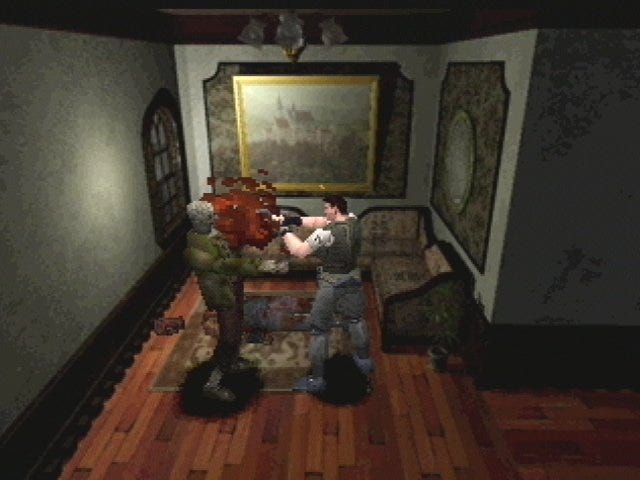

With Capcom officially announcing Resident Evil 9 or Resident Evil Requiem, the hype is real. Fans everywhere are dissecting clues, speculating on characters, and dreaming of what the next chapter in this iconic survival horror saga will bring. But in all the buzz about what’s next, it’s the perfect time to look back—to the haunted mansion where it all began.
Because Resident Evil 1 isn’t just the first game in the series—it’s the cracked, bloodstained foundation on which the entire horror franchise was built.
And nearly three decades later, its eerie halls and shambling horrors are still as iconic, terrifying, and unforgettable as ever.
The Birth of Survival Horror
When Resident Evil first released in 1996, the gaming landscape had never seen anything like it. Sure, there were creepy games before it. But this? This was something new. Claustrophobic camera angles. Limited ammo. Puzzles that made you question your sanity. And zombies—slow, rotting, relentless zombies—that didn’t just jump-scare you… they hunted you.
You played as Jill Valentine or Chris Redfield, elite operatives of the S.T.A.R.S. team, trapped in the now-infamous Spencer Mansion after a routine mission goes horribly wrong. What followed was a descent into a biological nightmare—complete with locked doors, disturbing journal entries, mutant dogs crashing through windows, and a slow unraveling of the secrets behind the Umbrella Corporation.
The mansion wasn’t just a setting. It was a character—dark, mysterious, and dripping with atmosphere. Every creaking floorboard, every door-loading animation, every shadow at the end of a hallway added to the tension. And it was in this tightly wound nightmare that survival horror as a genre truly found its name.
Why It Still Works

What makes Resident Evil 1 endure in the age of ray tracing and open-world horror? One word: design.
Capcom understood that true fear isn’t about constant action—it’s about control. Or the lack of it. Resident Evil 1 gave you clunky tank controls and fixed camera angles not to frustrate you (okay, maybe a little)—but to keep you vulnerable. You never quite saw what was around the next corner. And when you did, it was already too late.
The game’s deliberate pacing made every decision feel meaningful. Do you waste a bullet on a zombie now, or dodge and risk being cornered later? Do combine the green and red herb? That constant tension between resource management and survival made every step through the mansion feel like a gamble.
And let’s not forget the iconic moments—the first zombie turning to face the camera. The piano puzzle. The snake in the attic. The eerie silence of the save room. The sound of your typewriter echoing in the stillness.
It wasn’t just a game. It was an experience. One that left you with sweaty palms and unforgettable memories.
The Legacy of a Nightmare
Resident Evil 1 is the genesis point for one of gaming’s most influential horror franchises. But it didn’t stay frozen in the ‘90s. Capcom revisited it in 2002 with a stunning GameCube remake, transforming the mansion with gorgeous pre-rendered backgrounds, enhanced scares, and the terrifying Crimson Heads—zombies that came back stronger if not properly dispatched.
That remake, at that time, has become the gold standard for how to do horror remakes right, surpassed by Resident Evil 2 Remake. It respected the original, amplified the fear, and showed that this story still had teeth—even after all these years.
Every game in the series since—from Resident Evil 4’s action-horror pivot to the claustrophobic madness of Village—owes its existence to the atmosphere, structure, and tone set by the original.
And now, with Resident Evil Requiem on the horizon, it’s thrilling to think how far we’ve come. But it’s also worth remembering: everything started in a lonely mansion, with a handful of bullets and a door creaking open.
The First Cut Is the Deepest
As the fog parts around the next Resident Evil chapter, there’s no better time to go back to the beginning. Whether you’re a longtime fan who knows the Spencer Mansion by heart, or a new player curious about the roots of the franchise, Resident Evil 1 still holds up as a masterclass in atmosphere, pacing, and pure, skin-crawling dread(if you get past the tank controls!).
And its influence echoes not just in the Resident Evil games that followed, but across horror gaming as a whole—from the creepy alternate science of Dino Crisis, to the eerie stillness of indie horrors like Dredge, and the growing trend of psychological dread explored in articles like Why Horror Games Scare Us and Why Indie Games Are the Frontier of Terror.
So as we gear up for whatever Resident Evil has in store, take a moment to walk back through that creaky front door. The one with blood on the floor, typewriter ink on the table, and something scratching behind the walls.
Because the past doesn’t stay buried. Especially not in this mansion.


Leave a Reply