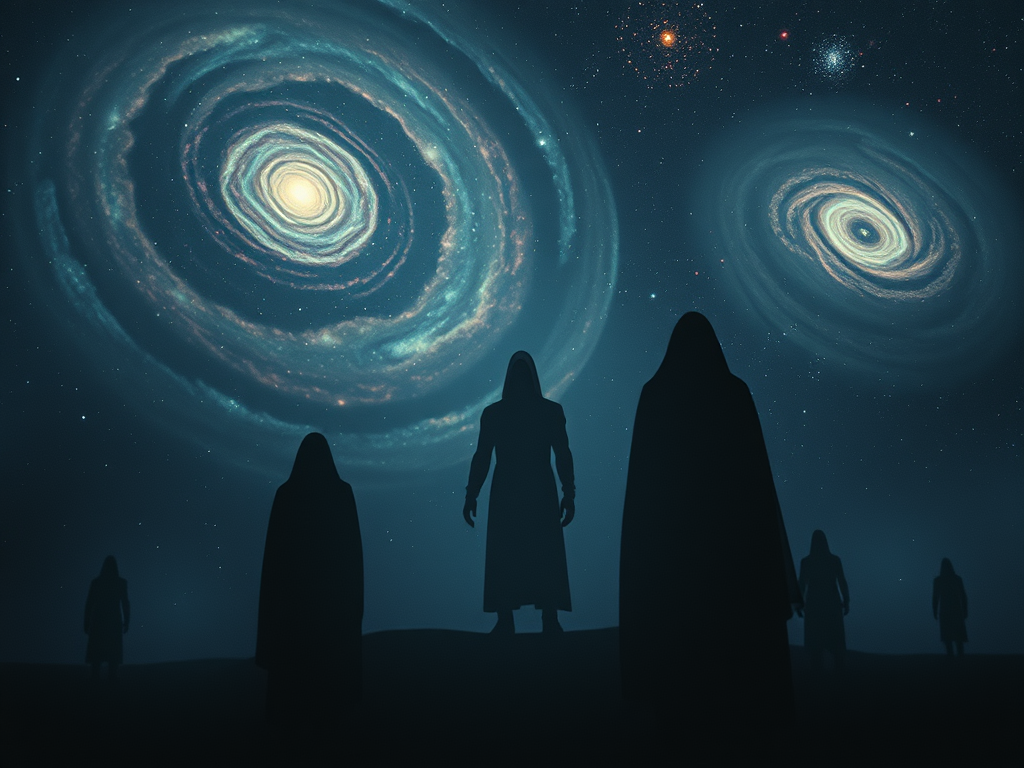
Cosmic horror, a unique and deeply unsettling subgenre of horror, is all about the terror of the unknown, the vastness of the universe, and the insignificance of humanity. Unlike traditional horror that often relies on ghosts, ghouls, and other familiar frights, cosmic horror taps into a primal fear—that the universe is vast, indifferent, and filled with incomprehensible, powerful entities beyond human understanding. Originating from the works of H.P. Lovecraft and evolving through modern interpretations, cosmic horror has become an influential force in literature, film, and gaming.
What is Cosmic Horror?

Cosmic horror, sometimes known as Lovecraftian horror, explores themes that invoke existential dread. Unlike other horror genres that focus on things that can be understood, like vampires or haunted houses, cosmic horror centres around the concept of the unknowable and the insignificance of humanity in the grand cosmic scheme. It’s less about immediate scares and more about instilling a lingering sense of dread and hopelessness.
A typical cosmic horror story doesn’t involve a heroic protagonist overcoming monstrous creatures. Instead, it often features a protagonist who confronts an unknowable force or eldritch entity, only to find their understanding of reality shattered. These tales emphasise themes like:
- Existential dread: The fear of humanity’s small place in the universe.
- Indifference: The realisation that the universe, and perhaps even its godlike beings, are indifferent to human concerns.
- Eldritch beings: Monstrous, ancient entities that defy human comprehension.
Origins of Cosmic Horror

The cosmic horror genre as we know it today was largely shaped by H.P. Lovecraft, an early 20th-century writer whose work is central to the genre. Lovecraft’s stories often involved protagonists who stumble upon ancient, terrifying secrets or encounter monstrous beings known as the “Great Old Ones”—godlike creatures who predate humanity and view our existence as trivial. One of Lovecraft’s most famous works, The Call of Cthulhu, introduces Cthulhu, a monstrous entity lying dormant beneath the sea, who could bring about the end of humanity if awakened.
Key Themes in Lovecraft’s Works
- Insignificance of Humanity: In Lovecraft’s tales, humans are typically insignificant in the grand scheme of the cosmos. His protagonists often encounter beings that view humanity with indifference or outright disdain.
- Madness: Many characters in cosmic horror lose their sanity when they confront the truth about the universe or gaze upon an incomprehensible entity.
- Ancient Mysteries: Lovecraft’s work often involves unearthing long-forgotten secrets or encountering ancient cults devoted to unspeakable horrors.
Lovecraft wasn’t the only author to explore cosmic horror, but he was one of the first to give it such a unique shape. His works have influenced countless other writers, filmmakers, and game designers who’ve added their own spin on these terrifying concepts.
Cosmic Horror Beyond Lovecraft
Though Lovecraft laid the foundation, cosmic horror has since evolved and diversified. Authors like Thomas Ligotti and Laird Barron have added fresh perspectives, expanding the genre while maintaining its core themes. Ligotti, for example, explores the dread of existence itself, suggesting that reality is far darker and more surreal than we want to believe. Barron incorporates noir elements and characters who survive more by chance than by strength, further emphasising human helplessness in a vast, unfeeling universe.
In cinema, cosmic horror has inspired classics like The Thing by John Carpenter and Event Horizon. These films take place in settings where isolation is combined with monstrous beings or terrifying discoveries. More recently, movies like Annihilation and Color Out of Space have used cosmic horror themes to explore the idea of transformations, mutations, and the impossibility of survival against nature’s alien forces.
Core Elements of Cosmic Horror
Cosmic horror thrives on a few defining elements that set it apart from other horror genres. Here are the pillars that create the unsettling dread cosmic horror is known for:
- Unknowable Entities: Monsters in cosmic horror are rarely fully seen or understood. Often called “eldritch” beings, they defy the human mind and exist beyond our comprehension.
- Isolation and Madness: Cosmic horror often involves protagonists who are isolated, both physically and mentally. This isolation amplifies their fear and vulnerability as they face the unknown.
- Fragmented Reality: In cosmic horror, reality itself is often questioned. Time and space can be distorted, characters’ perceptions can be unreliable, and knowledge of the universe can shatter the human psyche.
- Fatalism: Unlike in most horror, where there’s a chance to survive or defeat the evil force, cosmic horror often presents an inescapable doom. In this genre, humanity’s end might not be a matter of “if” but “when.”
Cosmic Horror in Popular Culture Today

With its rise in popularity, cosmic horror has found a comfortable place in pop culture beyond literature. Video games like Bloodborne and Darkest Dungeon have woven Lovecraftian themes of existential horror, madness, and terrifying monsters into gameplay. In Bloodborne, players encounter grotesque, otherworldly creatures and unravel a story that echoes Lovecraft’s obsessions with forbidden knowledge and ancient gods. These games create immersive experiences that allow players to confront the terrifying unknown directly.
In the literary world, authors like Caitlín R. Kiernan and Victor LaValle have continued to explore cosmic horror themes in fresh and contemporary ways. LaValle’s novella The Ballad of Black Tom offers a perspective on Lovecraft’s universe through the lens of African-American folklore, blending cosmic horror with social commentary.
Even comics and television have embraced cosmic horror themes, with shows like The X-Files and True Detective (especially its first season) dipping into cosmic horror’s well of existential dread. The fascination with cosmic horror in pop culture reflects our collective curiosity—and fear—of what lies beyond our understanding.
Why Cosmic Horror Continues to Fascinate
The appeal of cosmic horror lies in its ability to tap into deep, existential fears. As humans, we seek to understand the universe, but cosmic horror reminds us that there may be things that defy comprehension. By focusing on these abstract fears, cosmic horror tells us that some things are beyond our reach, and that our reality may be less safe and more fragile than we’d like to believe.
This terrifying sense of mystery and insignificance continues to resonate today, perhaps even more than it did in Lovecraft’s time. As science continues to reveal the vast, uncharted realms of the universe, cosmic horror brings our nightmares to life by asking a simple yet terrifying question: What if we’re not alone, and what if that’s a very, very bad thing?
Final Thoughts: Embracing the Unknown
For fans of horror who crave something deeper and more cerebral than typical jump scares, cosmic horror is an ideal genre to explore. It brings us face-to-face with the unknown and the unknowable, reminding us of our small place in the vast, indifferent universe. Whether in books, movies, or games, cosmic horror challenges us to confront our deepest fears—because, sometimes, the scariest things are the ones we can’t see, can’t fight, and can’t even begin to understand.
Leave a Reply